Now Hiring Therapists!
APPLY TODAY
agape logo 01a
  • Services
    • Physical Therapy
    • Occupational Therapy
    • Speech Therapy
    • Feeding Therapy
  • Who We Help
  • Success Stories
    • Share the Love
  • Careers
  • Resources
    • Insurance
    • FAQ
    • Community Resources
  • Contact Us
Patient
Dashboard
  • Services
    • Physical Therapy
    • Occupational Therapy
    • Speech Therapy
    • Feeding Therapy
  • Who We Help
  • Success Stories
    • Share the Love
  • Careers
  • Resources
    • Insurance
    • FAQ
    • Community Resources
  • Contact Us
  • Patient Dashboard
  • No Surprise Act

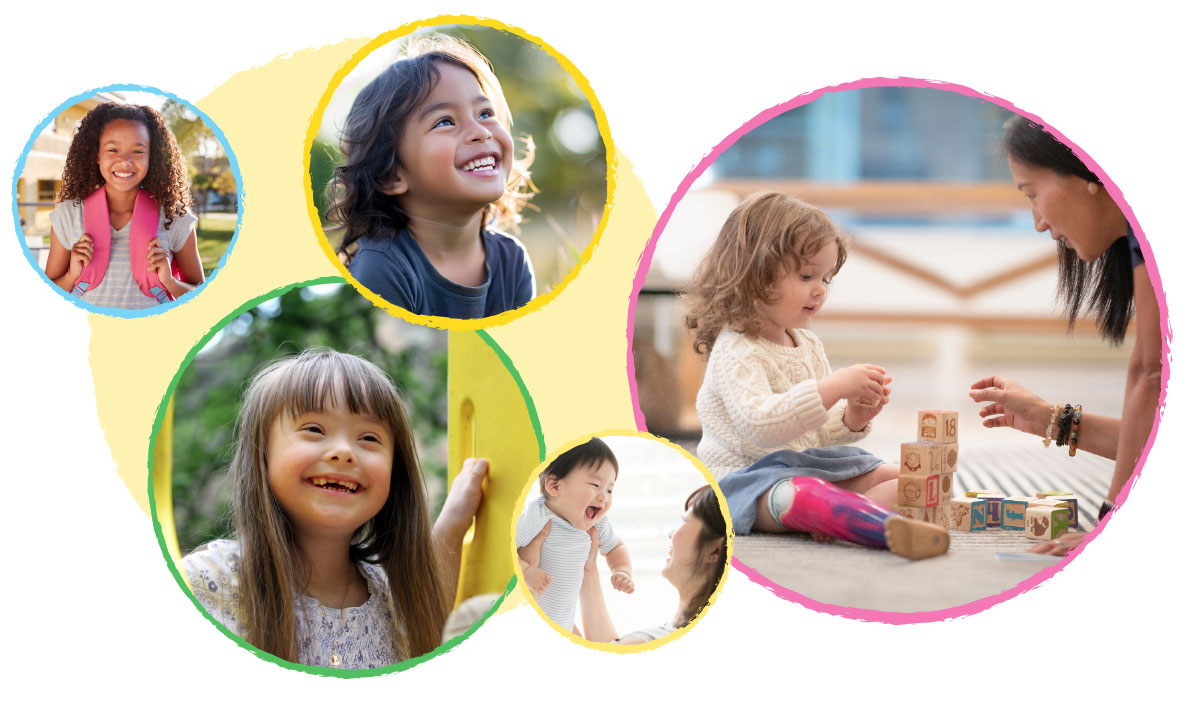
Slide apage who we help slider agape home slider 01 text bg yellow circle 01a who we help 01d We're here to help children of all ages, from birth to twenty-one.

Who We Help

agape heading under green 01a
agape border white 01a

Who We Help

We help kids birth to age twenty-one.

At Agape Pediatric Therapy we treat children of all ages with a wide range of conditions and disorders.  The conditions that impact our patients help us prescribe the right kind of care and the right therapist for them.  Learn more about some of the conditions we commonly treat and how therapy at Agape can have a positive impact on the lives of infants, children, and teens.

apage who we help intro 03b
Torticollis & Plagiocephaly
Autism

Pediatric Therapy for Autism Spectrum Disorder (ASD)

What is Autism?

Autism, or autism spectrum disorder (ASD), is a neurological and developmental disorder that impacts a child’s ability to interact with others, communicate, learn, and function in the world around them.  According to the Centers for Disease Control, autism now affects an estimated 1 in 36 children in the United States.

We know each child with Autism has a distinct set of strengths and challenges and requires individualized care.

Our team’s loving and patient approach to pediatric therapy supports the unique needs of children on the spectrum.  Our tailored treatment plans help children with ASD improve their motor, sensory processing, social, and communication skills.  Through therapy, we help children gain confidence, independence, and grow skills for life.  We also partner with parents to provide education, resources, and support.

At Agape Pediatric Therapy we strive to unlock each child’s potential, promoting growth and a positive relationship with the world around them.

Who We Help
Cerebral Palsy

Pediatric Therapy for Cerebral Palsy

What is Cerebral Palsy?

Cerebral palsy (CP) is a neurological condition that affects a child’s ability to move, balance, and maintain postural control.  CP is caused by damage or abnormal development in the parts of the brain that control movement.  These events can happen before, during, or shortly after birth when the brain is still developing.  There are several different types of Cerebral Palsy including spastic, dyskinetic, ataxic, and mixed.  CP is the most common motor disability in childhood.  While there is no cure for CP, early treatment is vital to help children reach their full potential.

Our specialized treatment approach focuses on improving functional abilities and quality of life for children with Cerebral Palsy.

Cerebral palsy affects a child’s muscle tone, posture, movement, balance, swallowing, speaking, and motor skills.  Our pediatric speech therapists use proven techniques to help children improve their ability to eat, speak, and communicate.  Our physical therapists help children learn how to roll, sit, crawl, and walk.  Occupational therapists help children with CP learn how to perform everyday tasks like playing, writing and dressing.  Therapy can also support cognitive development including memory, problem solving, and organizational skills.

Our goal at Agape Pediatric Therapy is not only to address the immediate needs of children with Cerebral Palsy, but to also provide education and resources so parents are empowered to help their children have the brightest possible future.

Autism
Childhood Apraxia of Speech

Pediatric Therapy for Childhood Apraxia of Speech

What is Childhood Apraxia of Speech?

Childhood Apraxia of Speech, or CAS, is a neurological speech disorder that impacts the speed, coordination, precision, and timing of the muscles producing speech sounds.  CAS falls under the broader umbrella of speech sound disorders, but it is different from articulation or phonology in that it is a disorder of motor planning.  This means that although the child knows what they want to say in their brain, the brain has a difficult time getting the muscles to plan the movement of one sound to the next.  CAS may occur as a result of some other known condition or disorder, or it may occur on its own, with the cause unknown.

Our speech therapy team helps children with apraxia improve their intelligibility and ability to communicate with the world around them.

CAS may result in:

  • Inability to produce certain speech sounds
  • Irregular or inconsistent speech sound errors
  • Inconsistent vowels or consonants on repeated syllables (ex: saying “banana” five times in a row and it comes out differently each time)
  • Articulatory groping, or searching, for the correct spot to place an articulator (the tongue, lips, and teeth)
  • Difficulty with smooth or precise movements from one sound to the next

If you think that your child may have CAS, it’s important you have them evaluated by a speech language pathologist.  Speech therapy can help improve the precision and coordination of the articulators to help your child improve intelligibility and their ability to communicate.

At Agape, we provide personalized speech therapy catered to the needs of each individual child to help them grow their communication skills and reach their goals while celebrating their progress along the way.

Cerebral Palsy
Developmental Delay

Pediatric Therapy for Developmental Delay

What is a Developmental Delay?

A developmental delay is when a child is slow to reach one or more developmental milestones, compared to their same-age peers.  Delays may involve motor function, speech and language, social and emotional, play, and thinking skills.  According to the CDC, approximately 1 in 6 children in the US has some form of developmental delay.  Early detection and treatment is vital to helping children catch up and reach developmental milestones.

Our team of pediatric therapists, PTs, OTs, and SLPs, have extensive experience evaluating and treating children with developmental delays.

When a child is not reaching motor, speech, or social milestones as expected, this can be concerning for parents.  At Agape we empower parents to trust their instincts vs “wait and see”.  An evaluation can determine if a child’s development is delayed or on track.  If a child does present with developmental delays, we will create a treatment plan and work closely with the parents to provide hands-on patient care, parent education and support, and a home program to achieve goals and meet milestones.

At Agape we know every child develops a little differently and some need a little extra support.  Our team loves helping children with developmental delays learn new skills, catch up to their peers, and reach their full potential.

Childhood Apraxia of Speech
Developmental Language Disorder

Pediatric Therapy for Developmental Language Disorder

What is Developmental Language Disorder?

Developmental Language Disorder, or DLD, is a mixed expressive/receptive language disorder that affects a child’s ability to use and understand language.  There is no known cause of DLD, and its effects persist from childhood into adulthood.  DLD is one of the most common developmental disorders, with approximately 1 in 14 children affected, according to the National Institute of Deafness and Other Communication Disorders.  DLD may impact a child’s reading, writing, comprehension, or expressive language.

Our Speech Team is highly skilled in helping children with Developmental Language Disorder gain language and communication skills, and overall confidence in themselves.

Symptoms of DLD include but are not limited to:

  • Difficulty using complex sentences
  • Difficulty with grammar concepts such as verb tenses, pronouns, or possessive words
  • Disorganized storytelling
  • Difficulty reading
  • Difficulty answering questions or following directions

If you think your child may have language delays, it’s important to have them evaluated by a speech language pathologist.  Early detection and intervention can help your child overcome some challenges and learn compensatory strategies for language use and comprehension.

At Agape, our goal is to equip your child with the skills necessary to thrive in academic and social settings, encouraging them every step of the way.

Developmental Delay
Down Syndrome

Pediatric Therapy for Down Syndrome

What is Down syndrome?

Down syndrome is a genetic condition in which a child is born with an extra chromosome number 21.  The extra chromosome is associated with cognitive, communication, and motor delays, as well as an increased risk for other health problems.  Down syndrome, also called trisomy 21 happens by chance and occurs in about 1 in every 700 babies.

We celebrate the uniqueness of every child and find fulfillment in watching individuals with Down syndrome experience the significant benefits of pediatric therapy.

Children with that special 21st chromosome sometimes need a little extra help and will often benefit from occupational, physical, and speech therapy.  Occupational therapy helps children increase independence with tasks like feeding, dressing, and writing.  Physical therapy helps children gain strength and postural control needed for crawling, walking, and running.  PT can also help children obtain adaptive equipment for sitting, standing, and walking.  Speech and language therapy helps children with Down syndrome improve their ability to communicate and interact with their parents, siblings, and peers.

At Agape Pediatric Therapy our goal is to empower children with Down syndrome to reach their full potential and live full and active lives.

Developmental Delay
Scoliosis

Pediatric Therapy for Scoliosis

What is Scoliosis?

Scoliosis is an abnormal curvature of the spine.  There are three types of scoliosis, idiopathic, congenital and neuromuscular.  80% of all scoliosis cases are idiopathic, which means the cause is unknown.  Idiopathic scoliosis occurs in girls more often than boys and typically occurs in children eleven and older Congenital scoliosis is a rare spine abnormality detected at birth.  Neuromuscular scoliosis happens alongside neurological conditions like cerebral palsy or muscular, spina bifida, or muscular dystrophy.  With all types of scoliosis early detection and treatment is the key to slowing or stopping the curve progression and decreasing the need for surgical intervention.

Our skilled and compassionate approach to treating Scoliosis addresses both the physical and emotional side effects of the diagnosis.

Signs of scoliosis may include uneven shoulders, shoulder blades that stick out, uneven waist, a uneven leg length or rib hump.  Children with scoliosis may experience back pain, leg pain or weakness, and difficulty standing up straight.  At Agape, PT for scoliosis is provided by a PT who is certified as a Schroth Level 1 Therapist.  She uses a specialized treatment method called the Schroth Method (BSPTS-Concept by Rigo) to improve posture, decrease pain and slow or stop the curve progression.  Scoliosis specific exercises are tailored to each child to improve their breathing, strength, and postural awareness.  Our scoliosis program includes a specialized PT evaluation, Schroth-based exercises based on each child’s spinal curve, and a customized home program.

When treating scoliosis at At Agape Pediatric Therapy we aim to prevent pain, slow or stop the progression of scoliosis and prevent the need for surgery.

Down Syndrome
Sensory Processing Disorder

Pediatric Therapy for Sensory Processing Disorder

Sensory Processing Disorder?

Sensory Processing Disorder (SPD) is when the brain has difficulty understanding or processing sensory information received through the senses.  The different senses include; visual, auditory, tactile, vestibular, what we feel inside of our bodies (interoception), and the ability to know how our body is moving (proprioception).  Children with SPD have difficulty with one or more of the senses, causing them to react too much or too little to stimulus.  Signs for SPD can be present as early as birth and the impact can change through the developmental stages.

Our OT Team is highly trained and experienced working with children of all ages with varying forms of Sensory Processing Disorder.

SPD can impact movement, attention, emotional regulation, behavior, and contribute to developmental delays.  Children with SPD may present with clumsiness, unusually high or low energy levels, frequent meltdowns, and social challenges.  They may dislike getting their hands dirty, avoid playing with slime or playdough, and not like balance activities or swings.  Children with SPD may be picky eaters, sensitive to smells, not tolerate noisy environments or tags on clothing.

At Agape we challenge a child’s sensory system with the goal of promoting improved regulation and more successful participation in daily activities.

Scoliosis
Speech Sound Disorders

Pediatric Therapy for Speech Sound Disorders

What are Speech Sound Disorders?

Speech sound disorders, also called articulation and phonological disorders, are difficulties producing certain sounds or classes of sounds.  There is no known cause for speech sound disorders that occur in the absence of structural abnormalities or other pre-existing syndromes or conditions.  Articulation errors are typically categorized as those that result from an inability to produce a certain sound.  Some children require direct teaching of where their lips, teeth, or tongue need to be placed to produce a certain sound.  Phonological errors are categorized as rule-based errors, in which a child substitutes or changes certain sounds in a particular pattern.

Our Speech Therapy Team is experienced and effective in helping children with speech sound disorders improve their speech intelligibility and confidence.

Examples of error patterns may include but are not limited to:

  • Omitting sounds – leaving off final consonants – hou for house, hi for hit, bi for bike.
  • Substituting one sound for another – saying /t/ instead of /k/ so “car” sounds like “tar” or saying /t/ instead of /s/, so “sip” sounds like “tip.”
  • Distorting sounds – an /s/ sounds more like a /th/ or a strong hissing sound

Children typically learn or master speech sounds in stages:

  • Around age 3: /k, g, t, d, p, b, m, n, f, v, h, y, w/ around 3 years old
  • Around age 4: /s, z, sh, ch, j, l/ and /th, r/ around 5 years old
  • Around age 5: /th, r/

Mastery means the child is consistently using the sound correctly in most situations.  If you think your child is struggling with some sounds or behind on their speech milestones, have them evaluated by a speech language pathologist.  Early support makes a big difference!

At Agape, we work with you and your child to develop strategies to improve their speech sounds, boost confidence, and reach communication goals.

Sensory Processing Disorder
Sports Injuries

Pediatric Therapy for Sports Injuries

What are Sports Injuries?

Youth sports participation has many benefits including improved mental, emotional, social, and physical health.  Taking part in sports also comes with an increased risk for injuries.  The most common sports injuries in kids are wrist, shoulder, and elbow injuries, shoulder pain or dislocation, ankle sprains, heel pain or Sever’s disease, shin splints, and knee injuries.

Our PTs treat a wide variety of orthopedic conditions and sports injuries to get kids off the bench and back to play.

Because a child’s bone growth, muscle mass, and ligament strength are different from an adult’s, their rehabilitation requires a different approach.  Our PTs take into consideration a child’s age, sport, and level of competition when approaching the rehabilitation process.  Our PTs focus on healing, prevention, and keeping young athletes safe.  Physical Therapy for sports injuries includes sport appropriate strength, balance, and coordination activities. Individually tailored home programs optimize post-injury and post-surgical recovery for athletes of all ages.

Our goal in PT is to promote healing, prevent recurring injuries, and return kids back to their sport.

Speech Sound Disorders
Stuttering

Pediatric Therapy for Stuttering

What is Stuttering?

Stuttering is a speech fluency disorder in which a person knows exactly what they want to say, but has difficulty saying it smoothly.  Approximately 5% of children experience stuttering at some point and it typically begins between the ages of 2 and 6.  While there is no single cause, speech therapy treatment can make a big difference in a child’s speech fluency and confidence.

Our comprehensive speech therapy treatments provide children with practical tools and encouragement to speak more smoothly and confidently.

Common signs of stuttering include:

  • Whole word repetitions: “What-what-what-what happened?”
  • Part word or sound/syllable repetitions: “He is a b-b-b-b-boy”
  • Sound prolongations: “ssssssssometimes we get ice cream”
  • Blocking: a complete pause with inability to produce sound before a sound or word comes out
  • Physical tension: excessive tension in the lips, jaw, neck, face, or excessive blinking
  • Avoidance: changing words or avoiding speaking situations because of fear of stuttering

If you have concerns about your child’s stuttering, we can help!  Our speech therapists provide education and encouragement for both the parent and child throughout the therapy process.

At Agape, speech therapy helps children improve fluency, reduce tension and build confidence in their communication.

Sports Injuries
Torticollis & Plagiocephaly

Pediatric Therapy for Torticollis & Plagiocephaly

What is Torticollis & Plagiocephaly?

Torticollis and plagiocephaly are two common conditions that can impact a baby’s development.  Torticollis is the tightening of a baby’s neck and postural muscles, causing the head to tilt to one side and rotate to the other side.  Plagiocephaly, also known as flat head syndrome, is when a baby develops a flattening on the side or back of the head.  Both of these conditions can develop in utero or when a baby spends too much time on their back or in baby containers like swings and car seats when awake.  Remember, back to sleep is still recommended to reduce the risk of SIDS.  If you notice symptoms of torticollis or plagiocephaly in your baby the “wait and see” approach is not recommended.  The earlier a baby begins treatment the more quickly and completely it can be resolved.

Our specialized approach to treating torticollis and plagiocephaly is effective, comfortable, and enjoyable for both babies and parents.

A baby with torticollis may tilt their head in one direction, prefer looking one direction, have difficulty rolling, and dislike tummy time.  Babies with torticollis may also have trouble breastfeeding on one side.  Physical therapy will include range of motion, holding techniques, positioning, and home exercises to improve neck range of motion, head shape, postural symmetry and gross motor development.

A baby with plagiocephaly may have a flatness on one side of their head, asymmetrical eyes or ears, or an uneven forehead.  In some cases a helmet may be required to correct a baby’s head shape.  During waking hours our PTs will recommend positions like supervised tummy time or side lying, carrying, and limiting time in infant car seats, swings, and bouncers.

At Agape our PTs partner with parents to help babies improve neck range of motion and postural alignment, reach motor milestones, and normalized head shape.
Sports Injuries
Who We Help

Agape Pediatric Therapy

1518 Jadwin Ave,
Richland, WA 99354

509.942.8474

Get Directions
agape logo rev 01a
  • Services
  • Who We Help
  • Success Stories
  • Careers
  • Resources
  • Contact Us
  • Patient Dashboard
  • No Surprise Act

©2025 Agape Pediatric Therapy
Website Design by Chase Design